
From Survival to Significance: How Coaching Helped Freight Innovations Become a Profitable, Purpose-Driven Family Business
2025

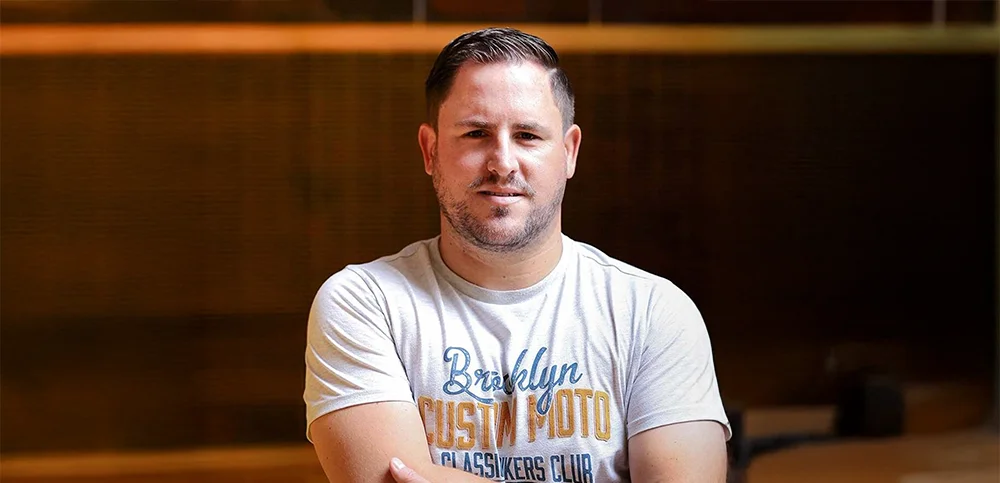
When Craig and Russel Burger started working with Grow in 2018, Freight Innovations was a family freight business in name, but felt more like a pressure cooker. Financially, the business was on shaky ground. They’d just posted a loss of nearly half a million rand and carried accumulated losses of over R1.2 million. Internally, tensions ran high. The brothers were barely speaking outside of work, and arguments, often loud, sometimes explosive, played out in front of staff. Their mom, Delia, who worked in the business but wasn’t a shareholder, added another layer of emotional complexity.
“We were making decisions nearly two years too late,” says Craig. “We were flying blind, just watching the bank balance and hoping for the best.”
They knew something had to change. But it wasn’t obvious how to begin.
Craig stumbled across a Grow client story in a business magazine and shared it with Russel. The brothers were intrigued, but unsure. Could they really afford coaching, especially while running at a loss? Could they risk investing in something intangible?
Ultimately, they realised they couldn’t afford not to.
“We always said we’d get a coach once we were ready,” Craig reflects. “But we realised that getting a coach was what would make us ready.”
From the very first session, it became clear this wouldn’t be a quick fix. Their coach would guide them through a deep, and at times uncomfortable, transformation, starting with the simplest of things: moving the photocopier.
The office setup at the time meant staff had to interrupt leadership meetings just to make copies. It wasn’t a big issue, until their coach challenged them to move it. They resisted. Why change what had always been?
But they moved it. And suddenly, meetings flowed more easily. Staff weren’t interrupting. A tiny operational tweak created more space, and more calm.
“Even now,” Craig laughs, “whenever we resist a change, we say: remember the photocopier.”
At the time, the brothers didn’t have access to basic financials. There were no management accounts. No projections. Just gut feel.
That changed when their coach introduced them to a fractional CFO and helped them implement Xero. Monthly financial reviews became a ritual. The team started tracking not just turnover, but margins, by department, by customer, by type of freight. Within months, insights emerged.
A pricing oversight in their international division had been quietly eroding profits. Correcting it gave them an immediate boost. On another occasion, they landed a big new customer, only to realise, through careful margin analysis, that the client was draining capacity and morale without delivering profit. With their coach’s support, they let the client go. Within three months, they’d replaced the revenue, this time, profitably.
Today, Freight Innovations tracks financials in real time and has a built-in annual and quarterly planning rhythm that ensures the leadership team stayed aligned. They have built dashboards that help the team stay focused on key metrics like on-time deliveries, missed collections, and credit limit breaches.
For the last three years, their projections have landed within 1–2% of actual performance. In the most recent budget cycle, Craig and Russel, historically conservative, set a stretch target they thought was too ambitious. They hit it.
“It changed our mindset,” says Russel. “What used to feel impossible is now just our new normal.”
In the early days, emotional outbursts were common. “We had full-blown arguments in front of the team,” says Craig. “And we told ourselves it was fine, this is just how family businesses are.”
But the tension was affecting more than morale. It impacted productivity, decision-making, and trust. The coach became not just a business guide, but a mediator, helping the brothers navigate deep-seated family dynamics with care and maturity.
Perhaps the most profound shift was in Craig’s leadership. Known for his work ethic but also his stress-fuelled outbursts, Craig had often defaulted to doing everything himself. Coaching helped him understand how this behaviour undermined his team.
Craig began to conduct one-on-one meetings with team members and trust his team to take ownership. With this, his decision-making became more considered and collaborative. Today, Craig is seen not just as a hard worker, but as a mentor and strategic thinker. His partnership with Russel has flourished, built on mutual respect and shared leadership responsibilities.
Over time, roles were clarified. Respect grew. Delia, once deeply skeptical of coaching, now credits the process with helping her see, and value, its long-term impact.
“Back then,” Russel recalls, “she saw the cost but not the value. Now, she sees the apples on the tree.”
As the leadership team grew in confidence, so did the wider team. Clear job scorecards, performance dashboards, and one-on-one check-ins created a new rhythm. Today, the business starts every morning with a daily huddle. Two team-building events a year, including a legendary ten-pin bowling competition, keep energy high.
And the brothers are no longer just operators. They’re becoming coaches themselves.
“Our coach always told us: coach, don’t tell,” says Craig. “That stuck with me. The other day, two of our staff came to us saying the vibe in the office felt off. We spoke about celebrating wins, and they ran with it. By the end of the day, the whole energy had changed.”
Craig and Russel still work hard. They still feel pressure. But it’s a different kind of pressure now, focused, strategic, and supported. When they face a tough decision, they no longer default to doing everything themselves. They consult. They reflect. They look at the numbers. And they ask their coach.
Today, Freight Innovations is on track to hit R2 million in profit for FY24/25. They’ve built a capable team, a calm culture, and a family business that works, for their clients, their staff, and each other.
“Seven years ago, we weren’t ready for coaching,” says Russel. “But the truth is, coaching is what made us ready.”
Or, as Craig puts it: “We’re still figuring things out. But now, we’re doing it with clarity, with structure, and with each other.”








Complete our form to subscribe to our mailing list.
©Copyright GROW. All rights reserved. Terms of use. Privacy Policy. Disclaimer. PAIA
 @GrowCoachingSA