
Letswalo Studio – Designing for growth
Construction
2021

My advice to people who are thinking about coaching, is to TAKE ACTION. Action eliminates fear. If you go for it, you will be surprised what can happen.
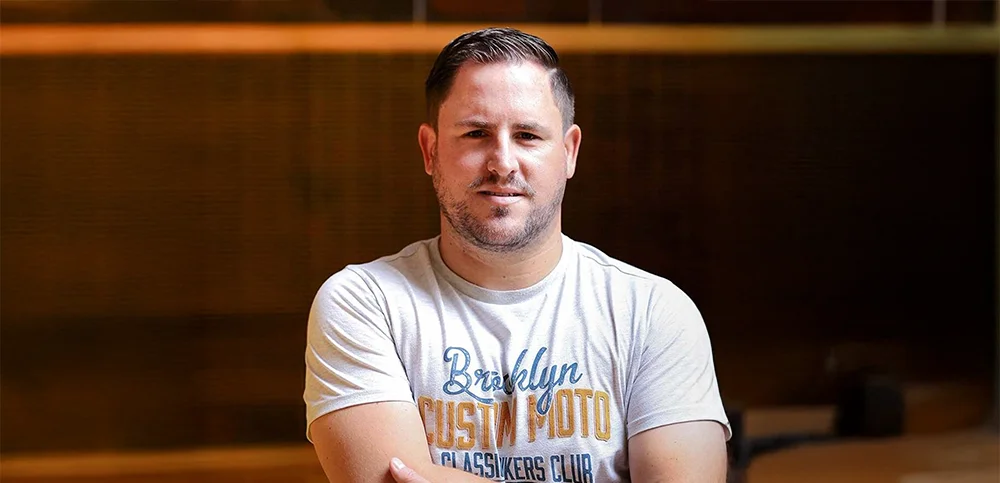
After a number of years of working for an architectural firm, Pule Letswalo decided to follow in his dad’s footsteps and start his own firm. Letswalo’s father was an accomplished entrepreneur, so his son had grown up in a household that understood what it took to be a successful business owner.
“I had an innate desire to create something that would leave a lasting legacy,” Letswalo recalled of his decision to create his own company. “I wanted to start a business that could make a difference” – and so he did. Letswalo Studio, an architectural firm servicing the residential space, was born. After two years, the business had stalled and Letswalo knew he had to do something if he wanted this to change.
In order to expand his business from a one-man firm into something more substantial, Letswalo needed help. “I wanted tangible results,” he said. “I wanted this business to grow.” With this goal in mind, Letswalo went in search of a business coaching company that could help him achieve his goals.
Letswalo was drawn to Grow as he knew one of the key areas he needed to focus on in his business was the sales process. “When I was operating alone, there were a lot of blind spots that prevented my business from growing, and selling. Selling was one of these blind spots,” he said. One of the selling points of the Grow offering was Grow business coach Sakhile Mkwanazi’s ability to sell Letswalo on the idea of coaching. “Mkwanazi sold Grow to me very well, and he showed me that Grow was a very professional organisation.” These were the characteristics Letswalo was looking to instill in his own company, Letswalo Studio.
As a small business, the best coaching solution for Letswalo was group coaching. The year-long programme would furnish Letswalo with all the tools he needed to ensure he could build his business holistically across all areas, including marketing and sales, recruitment and operations.
In January 2018, Letswalo started the programme along with several other small businesses, under the guidance of Mkwanazi. This was the ideal environment for Letswalo to start his journey. “Through group coaching I got to learn from fellow entrepreneurs. I got to understand their challenges and, as a result, I got to learn their lessons as well as my own. Learning from other people really helped me a lot.”
As a young firm looking to grow, Letswalo and Mkwanazi worked on a number of areas across the business. “For Letswalo Studio’s stage of growth it was really about putting in the fundamentals,” explained Mkwanazi.
Together, coach and client worked to identify what the business needed and started implementing fundamentals that would ensure its future growth. A marketing strategy was created, and structures put in place to ensure a professional look and feel for the business.
On the operations side, they set out a minimum production standard for all work and drawings. They also upgraded the financial and accounting side of the firm; These changes ensured that the image that Letswalo and his business projected was one of a professional architectural firm.
The next step was to ensure Letswalo recruited a team of people who were able to back him up. As he grew the business through selling, he would need a competent team of people to execute the work to the established standard. In order to do this, Mkwanazi worked with Letswalo to create a checklist of skills and traits required of new recruits. Letswalo stuck to the list rigorously when hiring, ensuring he had the best people working for him.
The next area Letswalo and Mkwanazi worked on was sales. If the business was to grow, Letswalo needed to be able to close deals. The sales process was the most important aspect of his coaching journey.
Mkwanazi and Letswalo started off by identifying what a Letswalo Studio customer looked like. “He had to realise that he shouldn’t be approaching everyone. Small businesses often fall into the trap of selling anything to anyone,” explained Sakhile. Rather, Letswalo needed to cherry-pick who he would focus on for potential business.
Next was for Mkwanazi to help Letswalo find his sales assertiveness. Mkwanazi recalled that this was what started to turn Letswalo ’s fortunes around. “He became clear about his selling and how to deal with objections,” said Mkwanazi. What made Letswalo so good at this was his gentle tone. “He knows how to say something softly and nicely, and to get what he is saying to resonate with people,” Mkwanazi explained. This meant that Letswalo was able to get customers on board by using his innate ability to connect with them. Letswalo added to this by saying, “Sales is about getting a client to feel a certain way. You want them to be comfortable and confident in your abilities.”
Once Letswalo had mastered the art of closing the deal, the team then moved on to packaging his sales process. Due to the nature of the business and the market in which Letswalo Studio was operating, Mkwanazi helped Letswalo come up with a tiered offering comprising of a Bronze, Silver and Gold package. This enabled Letswalo to offer his clients a range of services to fit any budget.
The final touch to Letswalo’s sales process was a one-page document that was sent through to the potential client before their meeting. This served to distinguish Letswalo Studio from others, in the mind of the client. Letswalo would then deliver a very tailored sales pitch, which would be concluded with him giving the client a pre-prepared quote. “The sales process was very tightly managed and worked well to generate sales for the business,” noted Mkwanazi.
“Through this process, Letswalo saw his business evolve from a one-man show to a business employing an additional six staff members. “Gross income in the business has increased 100-fold,” said Letswalo proudly.”
Mkwanazi believed the success Letswalo managed to achieve in just one year did not happen by accident. “What was clear was that Letswalo was very astute. He was very deliberate and really put an effort into fixing the areas of his business we identified needed work,” said Mkwanazi. “These things are not easy to get right the first time around,” Mkwanazi added. In addition, Mkwanazi said that once Letswalo had mastered the art of selling, the execution process was easy. Not only had Letswalo hired the right people, he then ensured he shared his philosophy with them, so everyone in the business was on the same page. “I noted that Letswalo was able to hire properly. This meant that he could focus his energy on closing the sales, and his people would execute the job flawlessly,” said Mkwanazi. This sales-close-execute cycle became the engine that got the business going.
In addition to having the willingness to learn and implement improved ways of doing things, Letswalo also lived by his own philosophy. “I believe there are three things that prevent people from achieving their dreams – I call them immobilisers; fear, doubt and worry,” he explained. He admitted that these emotions had held him back. “I doubted business coaching would work. I was scared because I had never tried it before,” he said.
“My advice to people who are thinking about coaching, is to TAKE ACTION. Action eliminates fear. If you go for it, you will be surprised what can happen on the other side.”
Letswalo’s new approach to business and selling ensured that Letswalo Studio was able to stay afloat during to COVID-19 lockdown. He noted, “This period was difficult, but it forced us to think about how we can be more adaptable when crises happen.” It gave him and his team the impetus to think about what it was they do, and how they can do things differently, to ensure the sustainability of the business going forward.
With the business growing, Letswalo has set his sights on his next goals. The first thing this young entrepreneur now wants, is to own his office space. At the time of the interview, Letswalo and his team were working in a shared workspace in the heart of the Maboneng Precinct in Johannesburg.
Letswalo is also seeking to increase his staff complement as part of his growth strategy, which includes increasing the size of his contracts with an eye to securing bigger residential projects, as well as moving into the commercial architecture space.
“Commercial business, though, has to be directly proportional to our team scaling and getting bigger. We need to be able to manage projects at that type of scale,” explained Letswalo.
Once his Johannesburg office reaches an optimal level, Letswalo then intends to take Letswalo Studio national, opening offices around the country.
Letswalo Studio is primed and ready to continue growing under the guidance of founder and owner Pule Letswalo. Although the business is currently too small for Letswalo to engage in one-on-one coaching, Mkwanazi feels it won’t be long before Letswalo is ready to take his Grow journey to the next level as he embarks on the focused and strategic development of his business.










Complete our form to subscribe to our mailing list.
©Copyright GROW. All rights reserved. Terms of use. Privacy Policy. Disclaimer. PAIA
 @GrowCoachingSA