
Cardinal – Strategy is king
Insurtech
2021

From cash-burn of millions a month to profitability in just 24 months.
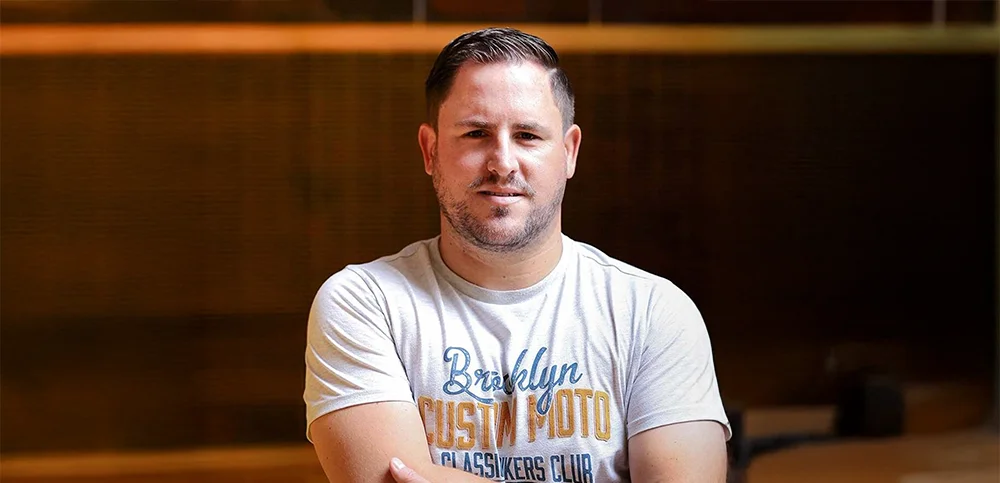
No business can succeed solely on the back of a good idea and positive intentions. Success requires a sound, well-thought-out strategy, and the ability to execute on that plan. Graham Harvey, a serial entrepreneur, realised that without the correct strategic direction, and the ability to execute on his goals, his business, Cardinal, was at risk, along with its 120 employees.
In 1998, Graham and his brother, Andrew, created Cardinal, a business that developed software solutions for the short-term insurance industry. Cardinal’s insurance administration software formed the backbone of their clients’ back-office processing systems. Whether they were insurance companies, underwriting management agents or brokers, the software managed all aspects of the business, from claims to general ledger, to reinsurance. It is also an actuarial rating engine, explained Graham.
Getting into the insurance game was a bit of a ‘cowboy ride’, according to Graham. “Back in the day, I had a sorghum brewery which I sold to NSB (National Sorghum Breweries), which is part of South African Breweries. At the same time my brother started Debonairs Pizza, which he later sold to Steers. After that, we got together and decided to move into insurance software.” The pair spotted an opportunity when the brokerage firm which insured the Debonairs stores needed premium finance.
The brothers started financing these insurance premiums. “We needed software to tell us what we were doing,” said Graham. “To adapt this software to insurance administration was the next opportunity. So, we sold off the premium finance business and focused on insurance technology,” he explained. The company grew from there. Graham bought his brother out of the business in 2004.
But then, in 2018, the local insurance industry hit a snag when some industry scandals came to light and working within the sector became increasingly complicated. Graham knew his ‘Wild West’ approach to running a business had to change, particularly if he wanted his business to thrive in a complex industry. He needed someone to help him find direction in terms of where to take the business, and then help the business define and execute its strategy.
Through the recommendation of a friend, Graham started to work with business coaching firm, Grow. “When we started working with Graham and Cardinal, the business was in quite a state of flux,” explained Graham’s coach. At the time, Graham had brought in a person to help manage the corporate side of the business and Graham had little oversight over what this person was doing. At the same time the business was investing heavily into new software solutions using funders’ capital. As it stood, the business was running at a loss. According to the coach, at that time, the business was very opaque, and it was not clear what was going on.
Graham knew he needed the right person to help guide him. “The entrepreneurial journey is not a lonely one, but you are trying to figure things out as you go. My move to coaching was very much about surrounding myself with the right talent. I heard Grow would facilitate a whole strategic process,” he recalled. Graham wanted to work with someone who would walk the journey with him, who would hold him and his leadership team accountable for the strategies and goals they had set. “My coach explained that they would set up quarterly and annual strategy sessions and work with OKRs (objectives and key results),” said Graham. “They would help us measure how we were performing against our key objectives.”
The first step in the process was for Cardinal’s leadership team to get together for a strategic planning session. The coaching introduced them to the Strategy Cascade, a framework through which they could organise their strategic thinking. Once the broader leadership team learned to improve their strategic thinking skills, they could then work on execution planning cycles. During that first session, the team was encouraged to work on the first execution plan. Three months later they were called back in and asked how they had done on achieving those goals. “We started this journey of building their execution muscle alongside the strategic thinking muscle,” explained the coach. But the process was not that simple; after all it was a complicated business. Graham’s coach acknowledged that it took him a long time to finally get a handle on what was happening in Cardinal, especially from the financial side. “Graham had a very good, instinctive handle on the financials of the business, but the details were hidden. It took me many months, even a year, to realise just how much money the business was losing. I was unaware of the extent of it. It was millions a month. They were going into the red with funders’ capital,” he said.
Then during a critical coaching session, Graham realised that he needed someone to manage the business’s finances. “I asked Graham to show me his management accounts. He didn’t really have a clear, concise set of management accounts as there wasn’t enough emphasis on running the business by numbers,” the coach recalled. At that point, Graham realised he needed to bring in a financial manager. By this time, Graham had already started to bring some solid leadership into the business, and it was during one of the team’s strategy sessions that a new team member said that she could take over the management of the accounts. And she did. She cleaned up and consolidated the company’s financials.
This was a pivotal point for Graham and his business. Armed with clarity around his financial situation, Graham was able to confront the raw, hard facts around what his business needed if it was to succeed. He could now start pulling the right levers to start shifting the business in the right direction.
Graham also came to see that in order for his business to succeed it needed to grow up, it needed to mature. Gone were the days of him and his leadership team reacting to whichever client shouted the loudest. Instead of resources being pulled from one client to the next, they needed to put systems in place to ensure that customer service became a priority. Graham knew that the entire organisation had to adopt a culture of discipline and that this would be helped by having properly implemented systems.
In order to achieve this goal, Graham recruited a strong operations person, Devan Reddy. His mandate was to instill discipline, especially around project implementation. He was also tasked with setting up a project office inside the business. After a few months, Graham appointed Reddy as Managing Director (MD). Reddy was a sound appointment who garnered a great deal of respect from the company’s leadership team and the employees.
As the systems kicked in, and with Graham now having a right-hand person to run the business for him, he began to relax and enjoy the business again.
“After Reddy’s appointment as MD, Graham’s stress levels, his time availability and his enjoyment of his business turned around 180 degrees. We are now having a lot of fun with this business.”
Another area which Graham and Cardinal wanted to develop is in the way the business markets itself to the industry. “A real challenge for us is finding our unique differentiator. What makes us unique among our competitors,” said Graham.
Grow, admitted Graham, had been extremely helpful in that regard. In addition to addressing this issue during the coaching sessions, where they focused on the brand and culture of the company, Grow also connected Graham with a marketing specialist who runs the Grow Marketing offering. This person is now working with Cardinal to help formulate a strong branding and company message and to get this out into the marketplace.
With a much clearer understanding of the business, and with the right people and systems in place, Graham was also able to start spending more time fine-tuning the strategy of the business. “Setting the strategic direction of the business is one of the most positive influences that coaching has had on Cardinal,” said Graham of this impact. Not only was Graham starting to expand his strategic thinking, he was now also better able to share his vision with the entire company. “That has helped us get everybody on board,” he said.
Graham’s coach had high praise for Graham’s ability to strategise. “They have developed their strategic thinking to the point where they have an unbelievable strategy. If they manage to execute on this strategy, they will have an incredible business. They will have a very strong, very defensible position in their chosen market space,” he said.
These firm foundations also meant that, when the COVID-19 pandemic struck and the industry was forced to explore more digital solutions, Cardinal was well positioned.
With digital migration to the cloud proving a major element in Graham’s future thinking, the pandemic enabled the company to stress-test its strategy. “Last year we moved our whole business into the cloud. All of our solutions are hosted in the cloud, so we were ready when COVID-19 came. We shut down a week before the official lockdown, it was seamless,” said Graham.
Another key outcome of coaching was Graham’s change in leadership style. From nobody knowing what was happening in the business, Cardinal started to adopt an open-book policy. Graham explained, “Everyone is aware of the specific goals of the company, and we share the accounts of the business. We now believe the best way to run any business is through the financial statements. And we now ensure everyone knows how their specific role contributes to the bigger picture.”
Now with greater confidence in the future of the business, Graham is thinking beyond South Africa’s borders. While they are looking to seriously disrupt the local insurance industry with a holistic, integrated system that will link all the players in the industry, Cardinal is now ready to enter the global market space.
“Currently we are in four countries. We have a focus on Australia, the United Kingdom and we have set up an office in Mauritius that provides our services to our international clients. We are also going into the United States and New Zealand,” Graham explained. He added, “There are some exciting areas that we want to grow into.”
Coaching has turned Cardinal into a serious player in the local insurance industry. And now the world is the company’s oyster.
Reflecting on his coaching journey, Graham Harvey of Cardinal is upbeat. “The most important message I wanted to stress is how much Grow assisted us with our strategy and how they intrinsically helped our business.”
What stood out for Graham was that Grow was not just a consulting firm; if anything they had become part of the business. “They really do partake in our business. They got to know our business and got involved in it. Then they held us to account for implementing our strategic goals,” said Graham.
This process was made easier because Graham’s coach had a track record in the tech sector, he has been an entrepreneur, has grown and sold businesses and has a thorough understanding of the industry. “Our coach is invaluable to us to be able to bounce off our strategic objectives and big business decisions,” noted Graham.
To date, Cardinal has used Grow for their one-on- one business coaching services. All the company’s executives meet regularly with their Grow coach and, as a team, they have quarterly and annual strategic planning sessions with him. As the business continues to grow, Graham is also keen to start using a combination of Grow’s services, including the new leadership and management training that Grow will be offering its clients in 2021.
With no end in sight for the growth and expansion of Cardinal, Graham believes that Grow will continue to be key strategic partners for a long time to come.











Complete our form to subscribe to our mailing list.
©Copyright GROW. All rights reserved. Terms of use. Privacy Policy. Disclaimer. PAIA
 @GrowCoachingSA