
From Surviving by the Skin of Their Teeth to Doubling Profit Two Years Running
2026

Atlas was already more than 50 years old, founded in 1966 on principles of organic chemistry and soil health, long before “regenerative agriculture” became mainstream language. But despite the depth of its product philosophy, the business itself was fragile. Finances were thin, the structure was flat and informal, and the lines between family, management and accountability were blurred.
Paul had come from construction and knew little about fertiliser. What he did recognise immediately was how precarious the situation was.
“It was probably one of the lowest points in the business’s history,” he recalls. “Everything felt like it was operating by the skin of our teeth.”
At the centre of the turnaround effort was Willem, an agronomist who had moved from the field into leadership just as the business was close to failing. Paul credits him with steadying what he describes as “a shipwreck of a business”.
“Willem came into absolute chaos and managed to turn the ship around,” says Paul. “I have enormous respect for how carefully he’s navigated that line ever since.”
By the time Atlas began working with Grow, the immediate crisis had passed. Losses had been reduced and the business was trending in the right direction. But internally, pressure was building in other ways.
Atlas was still operating with a very flat structure, shaped by years of working closely like a family rather than a formal executive team. Paul was mediating tension between his father, who remained involved until recently, and the management team. Difficult conversations were either avoided or handled informally, often at the wrong time and without landing well.
“I didn’t really have the argument to formalise things while we were struggling,” Paul explains. “But when we became profitable again, I knew we couldn’t keep operating like this.”
Around the same time, a close friend in a family business urged Paul to get a coach, not for tactics, but to reduce friction and create healthier ways of working together. When Paul made the call to bring coaching into Atlas, it was not universally welcomed.
“It went down like a lead balloon,” he laughs. “But two years later, everyone thinks it’s the best thing since sliced bread.”
What shifted first was not the strategy or the numbers, but the quality of conversation at executive level.
Coaching introduced two critical formats. The first was individual one-on-one sessions, what Paul refers to as “decompressors”, where each executive could be brutally honest in a confidential space, sharpen their thinking, and prepare for difficult discussions with colleagues.
“No one ever trains you how to have these conversations,” Paul says. “Those sessions helped me get clear on what I needed to say, and how to say it.”
The second was facilitated quarterly and annual strategy sessions. These became the forum where real issues could be raised openly, with timing, structure and facilitation that ensured conversations landed constructively.
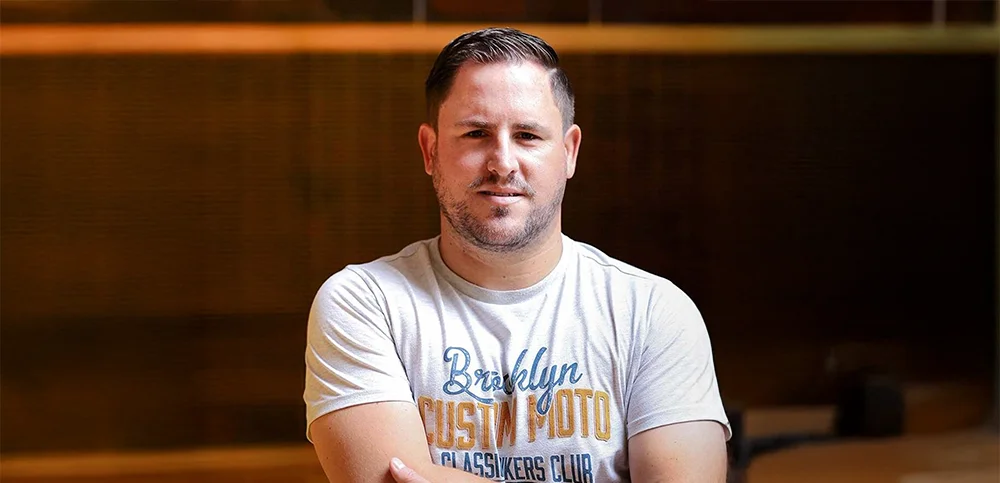
For Paul, this was especially significant. At 36, he was leading a team mostly in their 50s. Before coaching, he often hesitated to assert his authority. Now, with a coach guiding the process, he felt able to step fully into his role.
“As a leader in the business, I need to say what needs to be said,” he explains. “That space makes it possible to do that without blowing things up.”
Importantly, Paul is clear-eyed about what coaching did and did not do.
“It didn’t magically make us more profitable,” he says. “What it did was help us decide what to do first.”
Atlas already knew what needed attention. The challenge was sequencing and focus in a business with decades of accumulated complexity.
Through OKRs and structured planning, the team prioritised initiatives that would stabilise operations and unlock margin. These included appointing junior field staff with a longer-term return profile, recovering uninvoiced revenue, tightening stock and leverage controls, standardising recipes, reclaiming production dust, and reducing losses on the factory floor.
Underpinning all of this was a major uplift in financial and operational discipline. The business uncovered R1.8 million in uninvoiced revenue, dramatically improved weighbridge and stock controls across multiple sites, and reduced an effectively infinite recipe list down to around 30 standardised products. Production losses that had once gone unseen were now visible and being actively managed.
None of this was glamorous. All of it was essential.
At the same time, coaching played a critical role in managing Atlas’s unique leadership dynamic.
Paul is both the founder-owner and the Marketing Executive, while Willem, a cautious and highly disciplined operator, runs the business as Managing Director. Their contrasting styles, ambition on one side, prudence on the other, are both necessary and potentially combustible.
Coaching helped the team clarify roles, strengthen governance, and mature the board from an update forum into a body with a clear mandate to direct and hold management accountable. It also helped the executive team learn how to manage Paul in his different roles, without eroding trust or authority.
“Those dynamics would not have resolved themselves,” says their coach. “And without resolving them, the results wouldn’t have held.”
While Atlas was strengthening internally, the external environment began to shift.
For decades, Atlas had been advocating soil health, biology and balanced nutrition. Suddenly, the global conversation around regenerative agriculture caught up.
“All of a sudden, we’re the bee’s knees,” Paul says. “Everyone’s talking about soil health, and we’ve been doing this since the 1960s.”
Despite being priced 15 to 20 percent higher than chemical alternatives, Atlas’s products consistently deliver better long-term yields. As farmers became more receptive to this thinking, the business found itself better positioned than ever.
The opportunity, however, brought its own pressure.
“Now I’m in a much more positive headspace,” Paul reflects, “but I’m also more stressed. There’s so much opportunity, and execution is hard.”
Today, Atlas is profitable, culturally stronger, and better governed than it has been in years. Shareholder debt is being settled, freeing up cash for reinvestment. The leadership team is largely in place, with a few strategic hires still to come.
Today, Atlas is profitable, culturally stronger, and better governed than it has been in years. Profit has doubled year-on-year for the past two financial years, a result driven largely by disciplined execution, tighter operational control, and better decision-making at leadership level. Shareholder debt is being settled, freeing up cash for reinvestment, and the leadership team is largely in place, with a few strategic hires still to come.
Yet Paul is quick to resist the idea that the story is finished.
“This still feels like a 60-year-old startup,” he says. “We’ve turned the business around. That’s one of the hardest things you can do. The next chapter is about taking the opportunity that’s in front of us.”
Significant capacity investment lies ahead, along with careful decisions about growth, risk and leadership succession. But this time, Atlas is not navigating those decisions alone, or in the dark.
They have structure. They have clarity. And perhaps most importantly, they have the ability to talk about the hard things, before those things become crises.








Complete our form to subscribe to our mailing list.
©Copyright GROW. All rights reserved. Terms of use. Privacy Policy. Disclaimer. PAIA
 @GrowCoachingSA